
TheSEOHood — Singapore
E-commerce SEO Agency
Singapore
We Don't Just Rank Your Store. We Grow Your Revenue.
15+
Years Experience
60+
Ecommerce Projects
98.4%
SG Internet Penetration
3–6mo
Typical Results Timeline
Your competitors are on Page 1 right now — stealing your customers, taking your sales. Most got there through SEO, not ads.
At The SEO Hood, we’ve spent 15+ years across 60+ ecommerce projects in Singapore. We don’t chase traffic. We chase buyers.
We’re not a general agency. We’re a specialist ecommerce SEO agency built exclusively to help online stores rank higher, convert better, and grow revenue — without burning an ad budget every month.
Shopify. WooCommerce. Magento. Custom builds. We’ve seen it, fixed it, ranked it, scaled it.
60+ Singapore ecommerce businesses have trusted us. Yours could be next.

Why It Matters
Why E-commerce SEO Matters More Than Ever in Singapore
Singapore has one of the highest internet penetration rates in Asia at 98.4%. Your customers are searching for your products right now. The question is, are they finding you or your competitor?
Paid ads give you traffic today. But the moment you stop spending, the traffic stops too. E-commerce SEO gives you a compounding asset — one that drives qualified organic traffic 24 hours a day, 7 days a week, without an ad budget attached to every click.
Businesses that invest in ecommerce SEO consistently report lower cost per acquisition, higher conversion rates, and stronger long-term revenue growth compared to those relying solely on paid channels.
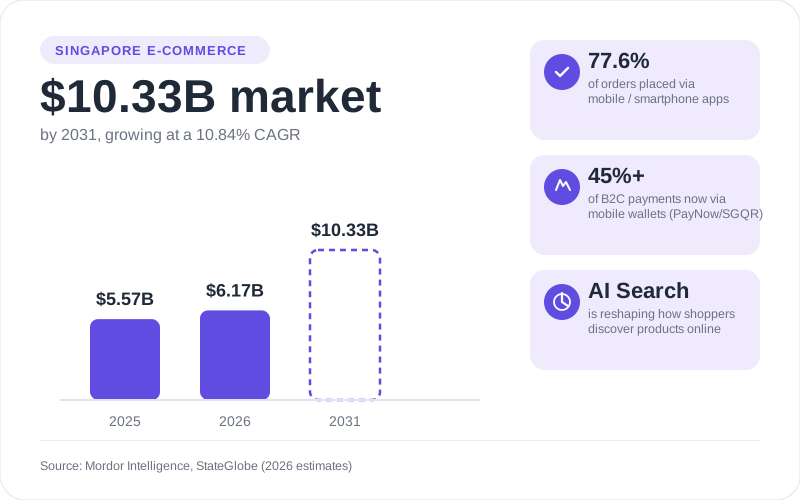
Singapore’s ecommerce market is growing fast. Consumers here are comfortable buying online, they research before they purchase, and they trust Google. If your store isn’t showing up for the keywords they’re typing in, that revenue is going straight to someone else.
The Foundation
What is E-commerce SEO?
E-commerce SEO is the process of optimising your online store so that product pages, category pages, and your entire site architecture rank higher on Google for the keywords your customers are actually searching.
It goes beyond standard SEO. It involves:

Product Page Optimisation
titles, descriptions, schema markup, and image alt tags

Category page SEO
making collection pages rank for high-volume buying keywords

Technical SEO
site speed, crawlability, mobile experience, and Core Web Vitals

Keyword research
inding purchase-intent keywords that convert, not just keywords with high traffic

Content strategy
building topical authority that supports your product rankings

Link building
earning high-quality backlinks that signal trust to Google
When all of these work together, your store stops relying on ads and starts generating sales from search.
Results
Real Results We've Delivered for E-commerce Stores
Numbers are easy to write. We'd rather show you the actual outcomes.

Fashion (Shopify)
3x Organic Traffic in 5 Months A Singapore-based fashion brand came to us stuck on page 3 for their core category keywords. No ad budget, no organic presence worth speaking of. We rebuilt their category page structure, fixed 200+ duplicate product URLs, and built topical content around their buying keywords. Five months later, organic traffic tripled — and ad spend dropped by 40% because they didn't need it as much.

Home Décor (WooCommerce)
Page 4 to Page 1 on 11 Keywords A home décor brand was losing clicks to bigger retailers on every product search that mattered. We identified the exact gap in their content and internal linking, optimised 80+ product pages with proper schema, and targeted buyer-intent long-tail terms their competitors were ignoring. In under 3 months, 11 product keywords hit Page 1.

Electronics Retailer
62% Drop in Cost Per Acquisition This client was spending heavily on Google Shopping with shrinking returns. We built an organic SEO foundation alongside their paid campaigns, targeting high-intent informational keywords that their competitors weren't ranking for. Over 6 months, organic revenue grew enough to reduce ad dependency significantly — CPA dropped 62%.

F&B Ecommerce
40% Organic Revenue Growth Quarter-on-Quarter A local F&B brand selling online wanted to own their niche search terms in Singapore before competitors did. We built a full content and category SEO strategy around Singapore-specific buying terms. Eight months in, organic revenue grew 40% quarter-on-quarter and has kept compounding.
Our Process
Our E-commerce SEO Agency Process
Ecommerce SEO
Platform-Specific E-commerce SEO
We work across all major ecommerce platforms:

Shopify SEO
fixing URL structures, duplicate pages, and collection-level optimisation

WooCommerce SEO
plugin configuration, schema implementation, and page speed

Magento & Custom Platforms
technical SEO audits and structured data at scale" in ecom service page
B2B vs B2C Ecommerce SEO: What's the Difference?
Not all ecommerce stores are the same, and your SEO strategy shouldn’t be either.
B2C E-commerce SEO
Targets individual consumers who make fast, emotion-driven purchase decisions. The focus is on product page optimisation, high-intent short-tail keywords, compelling product descriptions, image optimisation, and a seamless mobile checkout experience. Speed and trust signals matter most here.
B2B E-commerce SEO
Targets business buyers with longer decision cycles. The focus shifts to category-level authority, technical content, comparison pages, and keywords that reflect research-stage intent — like “bulk order supplier Singapore” or “wholesale distributor Singapore.” Trust is built through detailed product specs, case studies, and MOQ clarity.
At The SEO Hood, we build your ecommerce SEO strategy around your actual buyer — not a generic template.
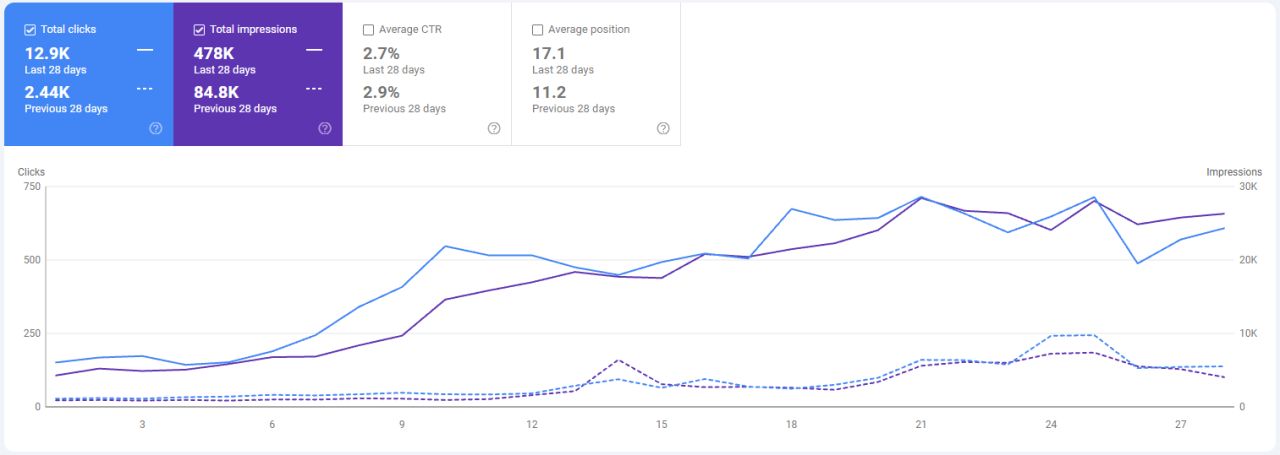
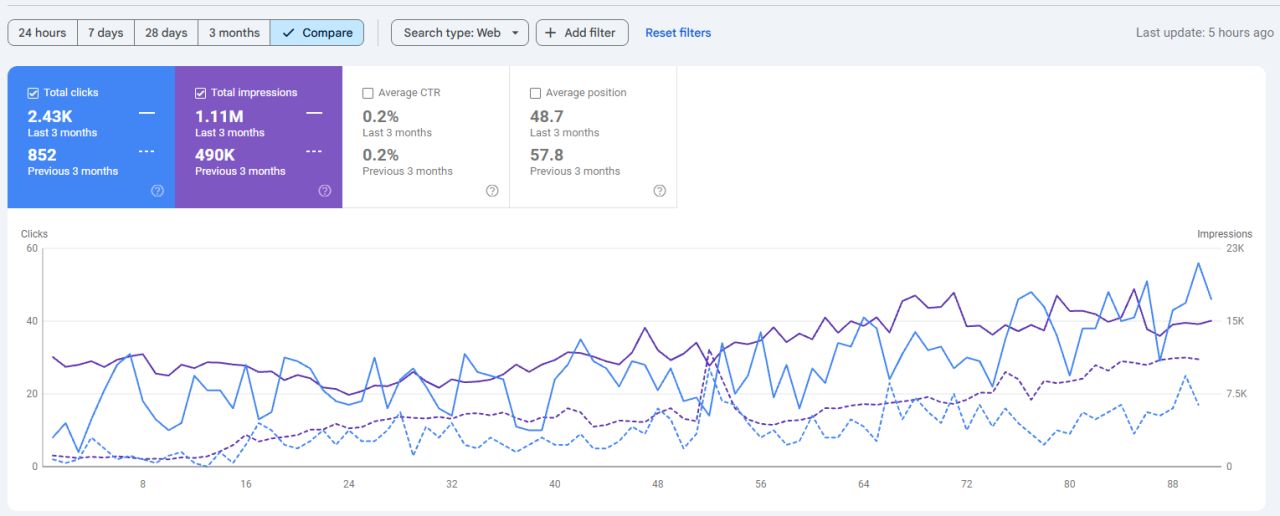
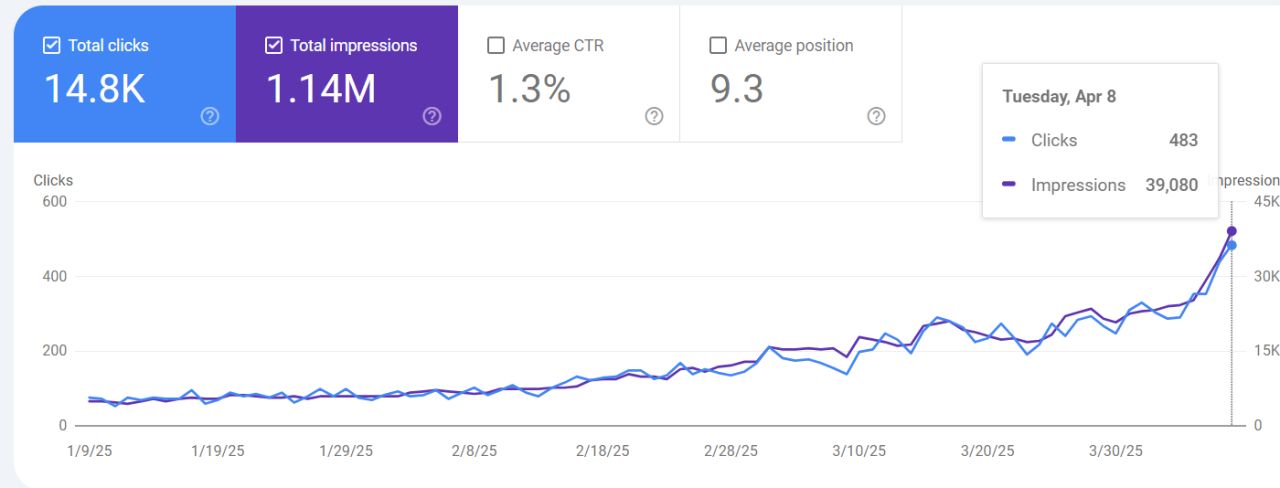
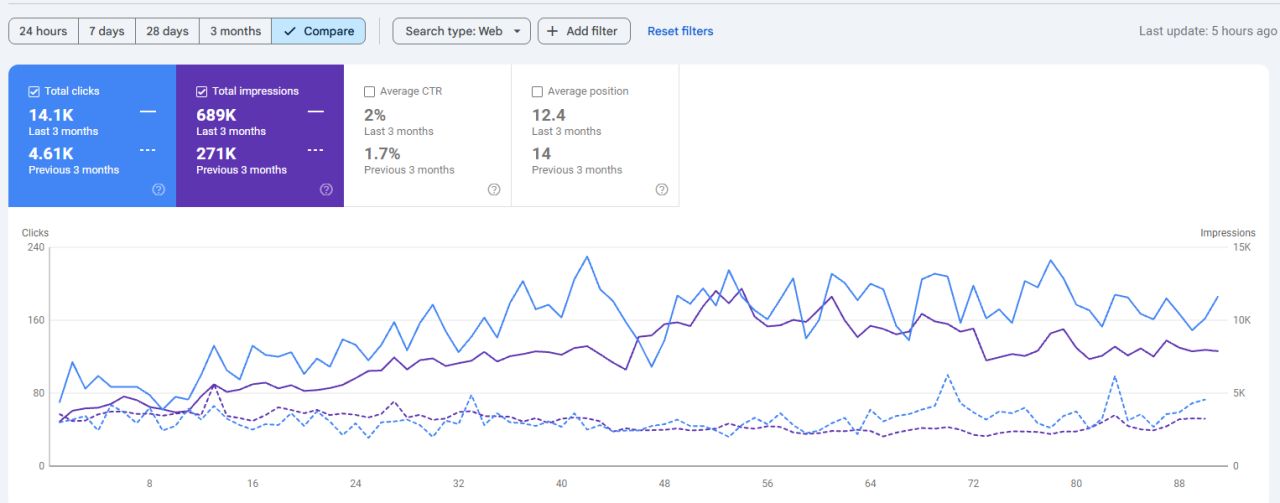
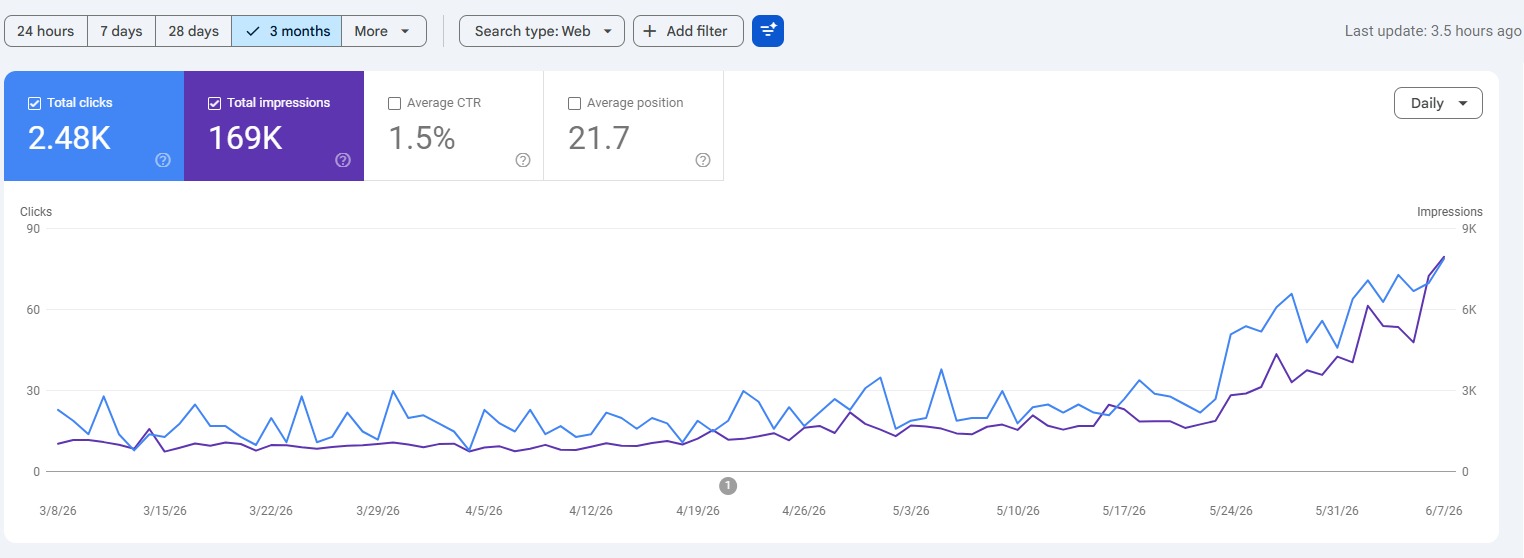
Google search console results TheSEOHood
AI Search & Generative Engine Optimisation (GEO) for Ecommerce
This is something most SEO agencies in Singapore aren’t talking about yet — but they should be.
In 2025 and into 2026, Google has been rolling out AI Overviews for more and more search queries, including product and shopping searches. Tools like ChatGPT, Perplexity, and Google’s own AI-powered shopping features are changing how people discover products online.
If your store isn’t structured for AI search visibility, you’re going to start losing clicks you don’t even know you’re losing.
Here’s what GEO means for your ecommerce store:
- Your product and category pages need to be structured so AI systems can parse and cite them accurately
- Your brand needs enough online authority that AI tools trust you as a source
- Your content needs to directly answer the questions buyers ask — not just target keywords
- Your schema markup needs to be complete so Google's AI can surface your products in rich results and AI-generated answers
At The SEO Hood, we build GEO and AEO (Answer Engine Optimisation) into every ecommerce SEO strategy we run. It’s not a separate service — it’s baked into how we optimise your store from day one.
If your competitors are already showing up in Google AI Overviews for your product category, this is urgent. If they’re not yet, this is your window to get there first.
Testimonials
What Businesses Say After Working With TheSEOHood
Don’t take TheSEOHood’s word for it. Here’s what real clients across Singapore experienced after making the switch to a GEO-first strategy.
Posted on GoogleTrustindex verifies that the original source of the review is Google. I have worked with the team at The SEOhood for almost a year. Over this period I have seen a visible growth in my business. The team, including Mudit and Bhupen are very proactive. They have gone out of their way and helped me with things outside their scope of work to ensure that the SEO results improve. Highly recommended.Posted on GoogleTrustindex verifies that the original source of the review is Google. Very good service very helpful for my team in CambodiaPosted on GoogleTrustindex verifies that the original source of the review is Google. Highly suggested place to go for seo does a very decent job and getting me enquirys day by day keep it up.Posted on GoogleTrustindex verifies that the original source of the review is Google. Professional, knowledgeable, and results-focused. TheSEOhood used advanced AI SEO techniques to improve our online visibility and website performance. Their ethical SEO methods and clear communication made the entire process smooth and trustworthy.Showing our latest reviews
Why Singapore Ecommerce Businesses Choose The SEO Hood
We focus on revenue, not rankings.
A rank means nothing if it doesn't bring sales. Every strategy we build is tied to conversion outcomes.
We're ecommerce specialists, not generalists.
We understand the unique challenges of online stores: duplicate content from product variants, thin category pages, faceted navigation issues, and seasonal keyword demand. We've solved these problems before.
No lock-in contracts.
We earn your business month by month by delivering results.
We combine traditional SEO with AI search visibility.
In 2026, your products need to appear not just on Google's blue links but also in Google AI Overviews and AI-powered shopping tools. Our GEO and AEO strategies make sure your store is visible across every platform your customers use.
Transparent reporting every month.
You'll see exactly what we did, what moved, and what we're doing next. No jargon. No hiding behind keyword tables. Real business metrics: traffic, conversions, and revenue impact.
Singapore market expertise.
We know the local search landscape, the seasonal peaks (11.11, 12.12, Chinese New Year), the platforms Singapore shoppers use, and the competitors you're up against. That context matters when we build your strategy.
Proven Results
Real markets. Real outcomes.
Numbers are easy to fake. Client results aren’t. Here’s what happened when real Singapore businesses stopped doing traditional SEO and started working with TheSEOHood.
What Bad Ecommerce SEO Looks Like (And How We're Different)
It's worth being honest about this because the Singapore market has its fair share of agencies running the same tired playbook.
|
What generic agencies do
|
What we do
|
|---|---|
|
Target high-volume keywords regardless of buyer intent
|
Map every keyword to purchase intent and the right page
|
|
Write thin, templated product descriptions
|
Rewrite product copy for both humans and search engines
|
|
Ignore category pages
|
Treat category pages as your highest-value ranking assets
|
|
Send generic monthly reports
|
Report on traffic, rankings, conversions, and revenue impact
|
|
Future-Proofing
|
Engineered for Agentic Search
|
|
Use low-quality link building
|
Build editorial backlinks from relevant, authoritative sources
|
|
Ignore AI search
|
Build GEO/AEO into every campaign from day one
|
Frequently Asked Questions
E-commerce SEO Agency Singapore
Ecommerce SEO focuses specifically on product pages, category pages, faceted navigation, and purchase-intent keywords. It requires platform-specific technical knowledge and conversion-focused optimisation that general SEO doesn’t cover. The stakes are also higher — a ranking drop on a product page directly hits revenue.
The real compounding returns come between 6 and 12 months, when your entity authority is strong enough that AI platforms consistently pull TheSEOHood clients as trusted sources in their industry.
Most stores see meaningful improvements in rankings and traffic within 3 to 6 months. Competitive product categories may take longer. The timeline depends on your store’s current authority, competition level, and the scope of work. We’ll give you a realistic timeline during your audit.
Yes. Shopify is one of the most common platforms we work with. We handle all Shopify-specific SEO challenges — duplicate URLs from product variants, collection page optimisation, app conflicts, and structured data implementation.
Absolutely. SEO and paid ads work best together. SEO reduces your long-term cost per acquisition while paid ads capture immediate demand. We help you build the organic foundation so you’re not entirely dependent on ad spend.
Typical outcomes for our ecommerce clients include increased organic traffic, higher product page rankings for purchase-intent keywords, improved conversion rates, and measurable revenue growth from organic search within 6 to 12 months.
Pricing varies depending on your store size, platform, and competition level. Most serious ecommerce SEO engagements start from a few thousand SGD per month. Singapore SMEs may also qualify for PSG grant support, which can cover up to 50% of costs. Book a free audit and we’ll give you a transparent quote.
GEO stands for Generative Engine Optimisation. It’s the practice of making your store visible not just in traditional Google results but also in AI-powered search tools like Google AI Overviews, ChatGPT, and Perplexity. In 2026, this is becoming increasingly important for ecommerce stores — especially in competitive categories. Yes, your store needs it.
Yes. We work across all major ecommerce platforms including WooCommerce, Magento, Shopify, and custom-built stores. Each platform has its own SEO challenges and we know how to handle them.
Local SEO focuses on ranking in your geographic area — for example, a physical retail store trying to show up in Google Maps. Ecommerce SEO focuses on ranking product and category pages for buyers searching online, regardless of location. Most ecommerce stores in Singapore need ecommerce SEO, not local SEO — though some benefit from both.
Common Shopify SEO issues include duplicate URLs from product variants, thin collection pages, missing structured data, slow page speeds, and poor internal linking. A free audit from us will flag exactly what’s holding your store back.
Yes, but the work needs to happen well before the season. SEO isn’t instant. If you want to rank for “Christmas gift ideas Singapore” in December, you need to start building that content and authority at least 3 to 4 months earlier. We help clients plan seasonal SEO calendars so they’re ready when demand spikes.
Algorithm updates are a reality of SEO. The best protection is building a strategy based on fundamentals — genuine content quality, real authority, strong technical health, and user experience. Agencies that rely on shortcuts and tricks get hit hard by updates. Our approach is built to be durable.